Responsible construction delivery
Environmental Management in Groundworks & Civil Engineering
Durkan & Sons manages environmental risks through practical planning, site controls and responsible use of resources across projects in Yorkshire and the North of England.
Practical environmental responsibility
Managing Impact Where It Matters Most
Groundworks and civil engineering affect land, water, materials, transport and neighbouring communities. Those impacts need to be understood and controlled from the start.
Our approach is based on identifying project-specific environmental risks, planning appropriate controls and reviewing them as conditions or activities change. Environmental responsibilities are communicated to the people carrying out and supervising the work.
We aim to avoid pollution, reduce unnecessary waste and use resources efficiently while meeting the project specification, programme and legal requirements. Claims are only meaningful when they are supported by practical actions on site.
Control Pollution
Plan for silt, fuel, concrete, dust, noise and other activity-specific risks.
Safeguard Land & Water
Consider drainage routes, ground conditions and sensitive receptors before work starts.
Use Resources Efficiently
Review quantities, material choices, logistics and opportunities to avoid unnecessary waste.
Monitor & Improve
Inspect controls, report issues and adjust arrangements when work or conditions change.
Environmental controls
Managing the Main Construction Risks
Controls are selected to suit the location, scope and environmental sensitivity of each project. They must remain practical, visible and appropriate to the work taking place.
Early Risk Review
Site constraints, drainage, sensitive areas, permits and client requirements are considered before activities begin.
Silt & Water Control
Excavations, dewatering, runoff and discharge routes are managed to reduce the risk of contaminated water leaving the work area.
Fuel & Concrete
Storage, refuelling, spill response and concrete-related activities are planned with suitable containment and controls.
Dust, Noise & Mud
Work methods, housekeeping and site access arrangements are reviewed to limit avoidable impact on neighbours and roads.
Materials & Waste
Ordering, storage, segregation, reuse and lawful disposal are considered throughout the construction programme.
Habitats & Wildlife
Known constraints and project-specific ecological requirements are communicated and respected during delivery.
Water and drainage
Protecting the Water Environment
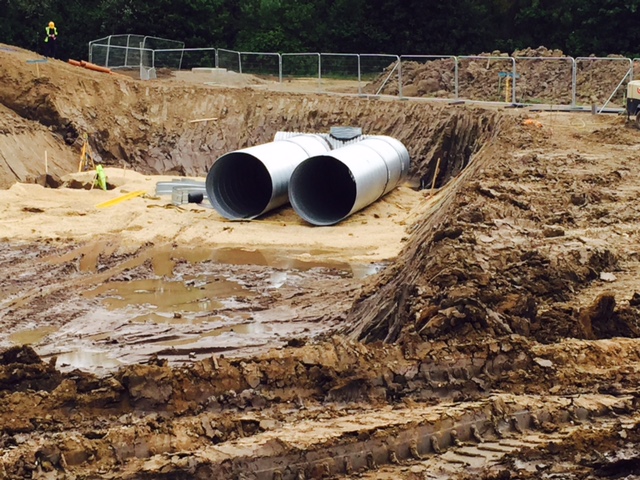
Drainage and earthworks can change how water moves across a site. Effective environmental management depends on understanding runoff routes, ground conditions and the sequence of construction.
We plan temporary and permanent drainage activities around the project requirements, coordinating controls as the site develops.
- Runoff and flow routes
- Silt-management measures
- Temporary drainage
- Dewatering arrangements
- Attenuation infrastructure
- Fuel and chemical storage
- Concrete washout controls
- Spill-response arrangements
Environmental management
Controls That Develop with the Project
Environmental management is not a one-off document. Controls must follow the programme, respond to changing site conditions and remain understood by the people doing the work.
Identify
Review the activities, location, receptors, constraints and applicable project requirements.
Plan
Select suitable working methods, controls, resources and emergency arrangements.
Communicate
Brief the relevant workforce, supervisors, suppliers and subcontractors on their responsibilities.
Monitor
Inspect the work and environmental controls, particularly when activities or conditions change.
Improve
Address incidents and observations, retain relevant records and apply lessons to future work.
Resource efficiency
Responsible Materials and Waste Management
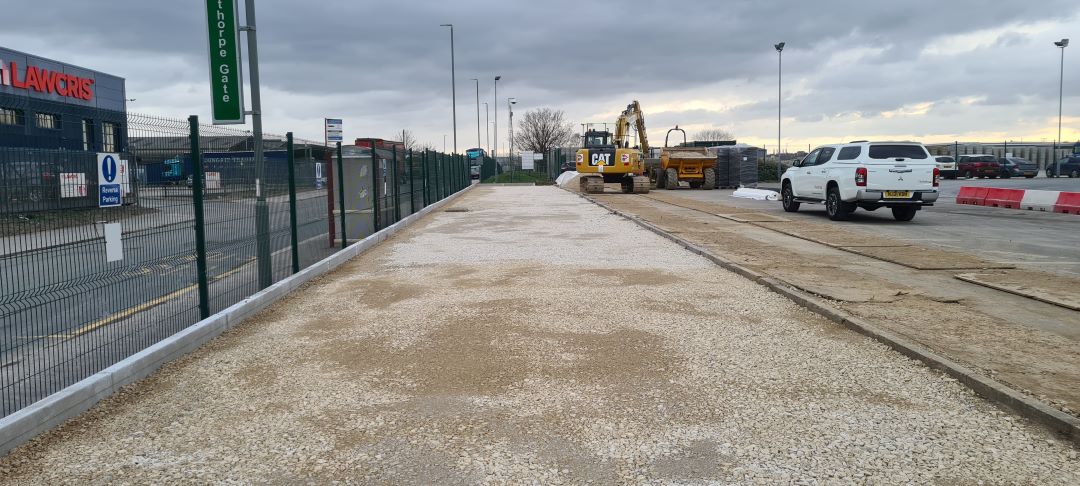
Material choices must meet the specification and intended performance. Where permitted and technically suitable, options can include responsibly sourced, recycled or recovered materials.
Efficient ordering, careful storage and good sequencing can also prevent avoidable waste before it occurs. Remaining waste should be segregated and transferred through appropriate, lawful routes.
- Accurate quantity planning
- Specification compliance
- Suitable recycled materials
- Reuse of suitable site-won material
- Protected material storage
- Waste segregation
- Licensed waste routes
- Transfer documentation
Plant, transport and energy
Reducing Avoidable Fuel and Movement
Heavy construction requires plant, transport and energy. The realistic priority is to remove avoidable consumption through sensible planning, suitable equipment and coordinated logistics.
Project teams can improve efficiency by matching plant to the task, maintaining equipment, limiting unnecessary idling and coordinating deliveries with access and programme requirements.
Planning a Groundworks or Civil Engineering Project?
Send us the drawings, specification and environmental requirements, or call our team to discuss the works.